

This post may contain affiliate links. Learn more.
Learn how to freeze shallots the right way to keep them fresh, flavoursome and ready for cooking anytime. This guide reveals our top tips for preparing and storing shallots, making it easy to reduce food waste.
STOP! Don’t toss those leftover shallots!
If you find yourself with an abundance of these delicately-flavoured alliums, freezing them is a great way to make sure that none go to waste.
Frozen onions are a staple in our house, it’s just SO COVENIENT to have them on hand, ready for weeknight cooking. Shallots freeze just as well and by following our simple tips, you can have them perfectly prepared and ready to use at a moments notice.
In this article, you’ll learn how to freeze shallots in a variety of ways, along with answers to common questions such as “Can you freeze shallots whole?” and “How long do frozen shallots last?”
We’re also sharing practical tips for using frozen shallots in your favourite recipes.
So, let’s jump in and turn your surplus shallots into an stash for future meals!
Quick Links:
- How to Freeze Shallots: 3 Easy Steps
- Why we recommend flash freezing (and how to do it)
- How to store frozen shallots
- How long do frozen shallots last?
- How to use frozen shallots
- Common mistakes to avoid
- FAQs

What are shallots?
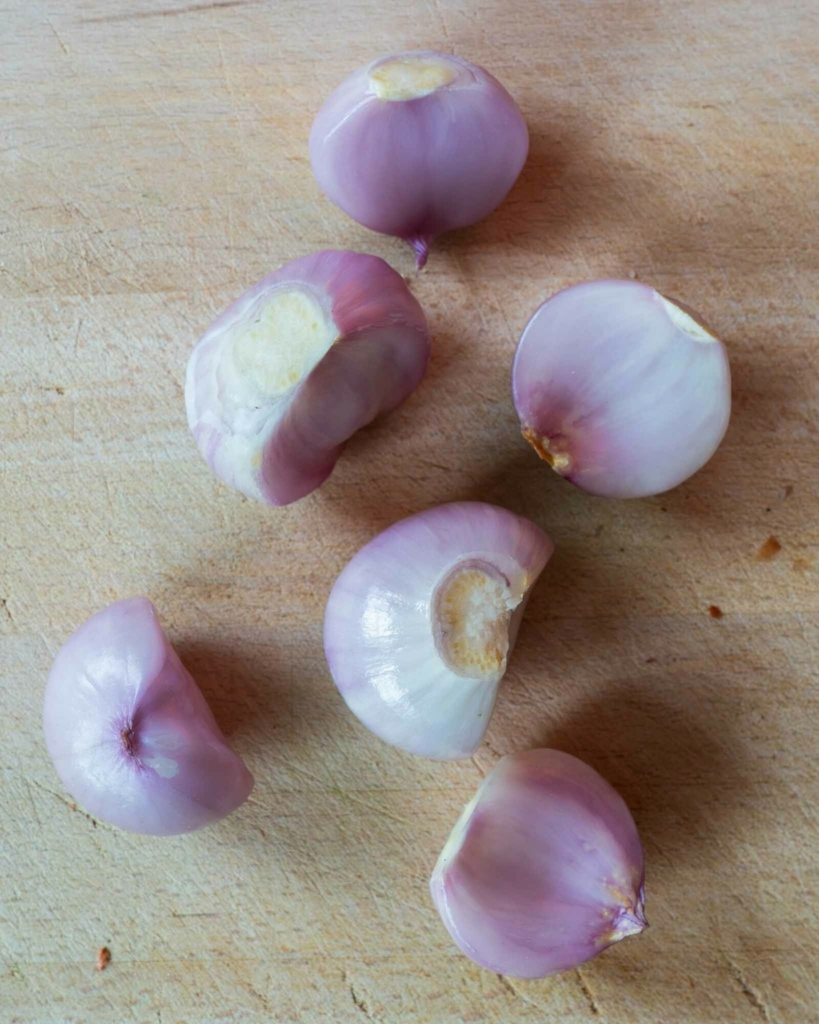
Shallots are small, round vegetables belonging to the allium family (aka a cousin to onions, garlic, leeks and chives).
While they resemble a small onion, shallots have a milder, sweeter flavour with garlicky undertones. Their unique flavor and delicate taste makes them popular in French cooking and for sauces and dressings where you want to avoid the often overpowering sharpness of an onion.
Shallots have clusters of cloves (similar to a bulb of garlic) that are covered by thin, papery skins that are usually brown or purple in colour.
Why Freeze Shallots?
Here are some great reasons to freeze those spare shallots:
Reduces food waste. Likely the reason you are here reading this post! Don’t let those leftover shallots go to waste, freeze them for later use to cut down on wasted food.
Saves time. As a busy Mum I am a big fan of anything that saves me time in the kitchen, and freezing ready prepared ingredients is a winner. Prepped and frozen shallots can be cooked straight from frozen.
Maintains flavour. Whilst freezing shallots will likely affect their texture, the flavour should stay sharp and sweet through the freezing process.
Budget-friendly. If you’ve got the freezer space, a good tip is to stock up on shallots (and other freezable fruits and veggies) when they’re on sale at the grocery store, prep them and freeze them for year-round use.
How to freeze shallots: 3 easy steps
If you’ve been wondering “Can I freeze shallots?” the answer is yes! Here’s how to freeze fresh shallots in three easy steps:
STEP 1: Prepare the shallots.
-
- Trim the top and bottom (root end) and peel off the papery skins.
- Wash the peeled shallots and pat them dry.
- Thinly slice or dice the prepared shallots, according to your personal preference.
- Want to freeze the shallots whole? Follow these tips here to blanch them first.
STEP 2: Flash freeze. Spread the sliced, diced or blanched whole shallots out on a tray lined with parchment paper. Freeze until solid (1-2 hours).
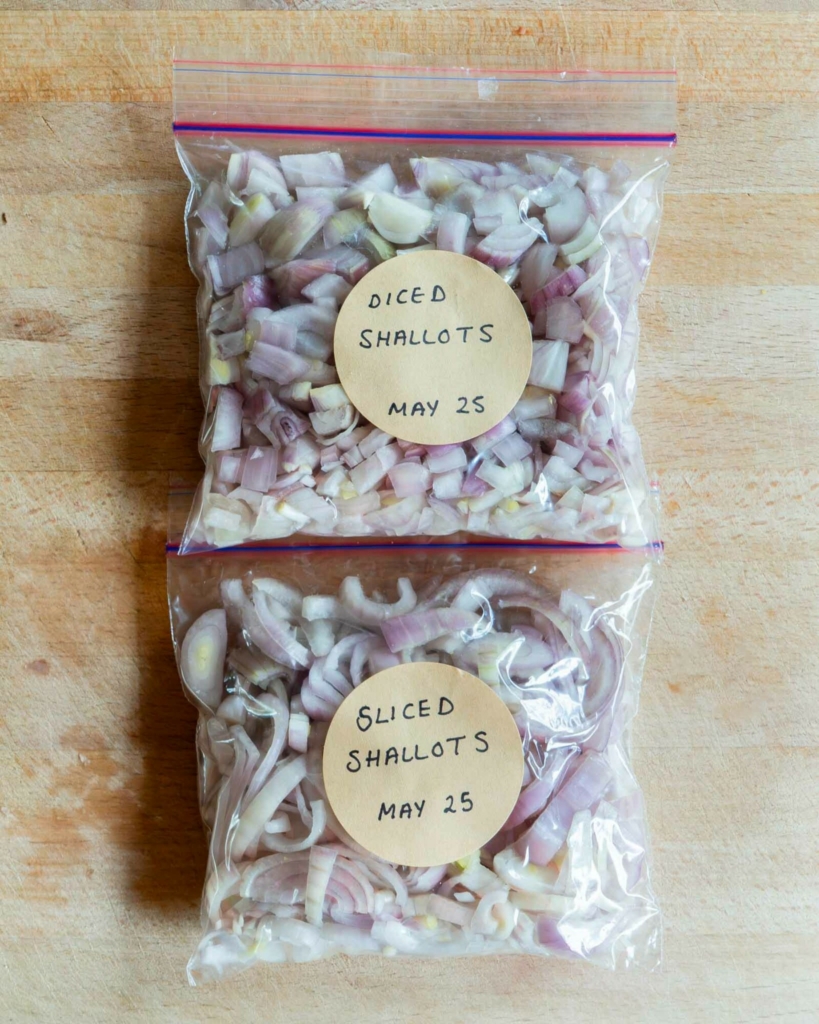
STEP 3: Store. Pack the frozen shallots into resealable freezer bags, squeeze out any excess air, seal and label with the contents and the date of freezing.

Do shallots need blanching before freezing?
No, diced and sliced shallots don’t typically need to be blanched before freezing.
Blanching is a process where vegetables are briefly boiled in hot water and then quickly cooled in ice water. Blanching is often recommended before freezing vegetables such as broccoli and carrots because it can help to prevent loss of flavour and colour. Shallots are low in moisture and tend to retain their flavour and freeze well without blanching when sliced or diced.
If you plan on freezing your shallots whole, however, we do recommend blanching as follows:
- Trim, peel and then clean the shallots thoroughly.
- Blanch them in boiling water for around 3 minutes (or until the centre is completely heated) before cooling them quickly in ice water.
- Drain well, dry and then freeze in a freezer bag with any excess air removed.
Freezing whole shallots is only really recommended if you plan to cook them whole (e.g. by roasting them). If you intend to slice or dice them at a later date it would be better to do that before freezing (see our 3 simple steps here), which would also avoid the need for blanching.
Why we recommend flash freezing (and how to do it)
The best way to freeze shallots is to flash freeze. Flash freezing means freezing food items individually before transferring them to a bag or freezer-safe container.
In the case of diced or sliced shallots, it means freezing them in a single layer on a tray, rather than putting the cut, fresh shallots straight in a freezer bag to be frozen.
Here’s why we recommend flash freezing shallots for best results:
- Prevents clumping. By freezing diced/sliced shallots in a single layer before they are transferred to a freezer bag, it helps to prevent the pieces from clumping and freezing into one big frozen mass.
- Better flavour. The diced/sliced shallots will freeze more quickly in a single layer, which helps to preserve more flavour and texture.
How to flash freeze shallots:
- Line a baking tray with parchment paper.
- Sprinkle the prepared shallots (peeled, washed, dried and sliced/diced) in a thin layer on the tray.
- Place the baking sheet in the freezer for 1-2 hours until the shallots are frozen.
- Once frozen, transfer the shallots into a labelled and dated freezer bag and put them back in the freezer.
Really can’t be bothered to flash freeze? Follow this tip!
Flash freezing will prevent your shallots from clumping into an unmanageable mass BUT if you don’t have the space/time to follow this step, we have an alternative tip to reduce clumping.
To reduce clumping without the need for flash freezing, place the unfrozen sliced/diced shallots into a large freezer bag and lay it flat in the freezer so that the pieces freeze into a thin layer; this makes it much easier to break off a small amount when you come to use them.

Storing and using frozen shallots
How to store frozen shallots
Store frozen shallots in freezer-safe bags or flexible containers and remove as much excess air as possible before sealing (to help prevent freezer burn).
It may also be beneficial to freeze in smaller portions, such as in large ice cube trays, if you tend to use a similar amount in each recipe.
How to freeze shallots in freezer bags
Freezer bags are a space saving and efficient way to store frozen shallots. Here’s how to use them:
- Opt for a high-quality ziplock bag. Tip: Silicone freezer bags are a great long-lasting option for reusable freezer bags.
- Label the bags with the contents and date (and quantity if required)
- Press out as much air as possible before sealing (to reduce ‘freezer burn’). Tip: You could use a straw to suck out air before sealing the bags.
- Lay the bags flat in the freezer for easy stacking.
How long do frozen shallots last?
For optimal flavour, use frozen shallots within 3 months.
How to use frozen shallots
You can use frozen shallots in various dishes where they’ll be cooked, such as:
- Curries
- Pasta sauces
- Stir-fries
- Gravy
- Burgers
- Soups and stews
- Vegan quiches and tarts
There is no need to thaw frozen diced/sliced shallots, just toss the desired amount of frozen chopped shallots straight into the cooking pan!

Further tips and FAQs
Quick Tips
- No need to blanch. Diced/sliced shallots can be frozen raw and don’t need to be blanched.
- Prep like a pro. Dice or slice your shallots before freezing for easy cooking.
- Label and portion. Label freezer bags with dates and contents and if you have a lot of shallots, split them into portions.
- Cook from frozen. Frozen diced/sliced shallots can be added straight to the pan for cooking.
- Best for cooked recipes. Avoid using frozen shallots in raw dishes such as salads.
- Use within 3 months. For the best quality and flavour.
Common mistakes to avoid when freezing shallots
Avoid these mistakes when freezing shallots:
Freezing wet shallots. Always dry them thoroughly before freezing to prevent ice buildup.
Forgetting labels. “I’ll remember what that is!” – the classic line I’ve said to myself multiple times. Spoiler alert: I rarely remember what ‘that’ is! Always add a label to your freezer bag that tells you what is in the bag and when it was frozen.
Not portioning. Frozen shallots and onions can stick together, particularly if there is ice build. This can make it hard to get out exactly what you need for your recipe. To avoid this, flash freeze diced and sliced shallots in layers, portion them into smaller bags/containers once frozen and removing as much air as possible before sealing the container/bag.
Using thin bags. Poor quality freezer bags can lead to freezer burn and can rip when opening and closing. Opt for heavy-duty freezer bags, such as these silicone freezer bags.
Storing in containers. It can be difficult to get ingredients out of an inflexible container (such as glass or hard plastic) without defrosting the contents first. We therefore recommend storing frozen vegetables in freezer bags or flexible silicone containers (such as souper cubes).

FAQs
What to do with a bag of shallots?
If you’ve got an abundance of shallots, then freezing them is a great option! Follow our 3 easy steps to freezing shallots.
Alternatively, you could use your fresh shallots to make caramelised shallots, pickled shallots or use them in place of onions in our wild mushroom risotto for a beautifully delicate and sweet flavor.
How to store shallots after cutting
If you’ve cut shallots and don’t plan to freeze them, then store them in an airtight container in the fridge for up to 3 days.
For longer storage, freeze the cut shallots immediately after cutting following our 3 steps for freezing shallots.
Why do you soak shallots in ice water?
Some people like to soak raw shallots and onions in ice cold water before slicing to reduce their sharpness (and therefore the likelihood of you shedding a tear when you’re cutting them!)
It’s not necessary but can be useful if you are sensitive to alliums.
Can you freeze shallots whole?
Yes, but you’ll need to prepare them first:
- Trim, peel and then clean the shallots thoroughly.
- Blanch them in boiling water for around 3 minutes (or until the centre is completely heated) before cooling them quickly in ice water.
- Drain well, dry and then freeze in a freezer bag with any excess air removed.
Freezing whole shallots is only really recommended if you plan to cook them whole (e.g. by roasting them). If you intend to slice or dice them at a later date it would be better to do that before freezing (see our 3 simple steps here), which would also avoid the need for blanching.
Note: Blanching whole shallots can help to preserve their texture and flavour as well as slow deterioration during freezing.
Does freezing affect the texture of shallots?
Yes, once defrosted, shallots will lose their crispness. This makes them perfect for cooking but not ideal for raw dishes such as salads.
Can you cook shallots from frozen?
Yes, there is no need to defrost shallots before cooking (and it’s actually better to cook from frozen as they tend to go mushy when defrosted).
Whole shallots are best for roasting.
Sliced or diced shallots are great for frying; just add them straight to a frying pan with a little oil as a base for soups and sauces.
When should you not use shallots?
Discard fresh shallots that feel mushy, have dark spots, have signs of decay, smell sour or have started to rot or sprout mould.
Discard frozen shallots if they’ve been exposed to air and show signs of freezer burn (white, dry patches).
Shallots vs onions in the freezer: What’s the difference?
- Texture: The textural changes are similar – both get softer after freezing.
- Flavour: Shallots tend to hold a bit more flavour after freezing. Their flavour tends to be more subtle, with a hint of garlicky sweetness.
- Storage: Both onions and shallots freeze similarly, although onions can sometimes release more liquid when thawed.
Freezing shallots is a great way to have this flavoursome ingredient on hand for a range of cooked dishes.
Whether you’re trying to save money, reduce food waste or speed up weeknight cooking, we hope this guide has answered all of your questions on freezing shallots.
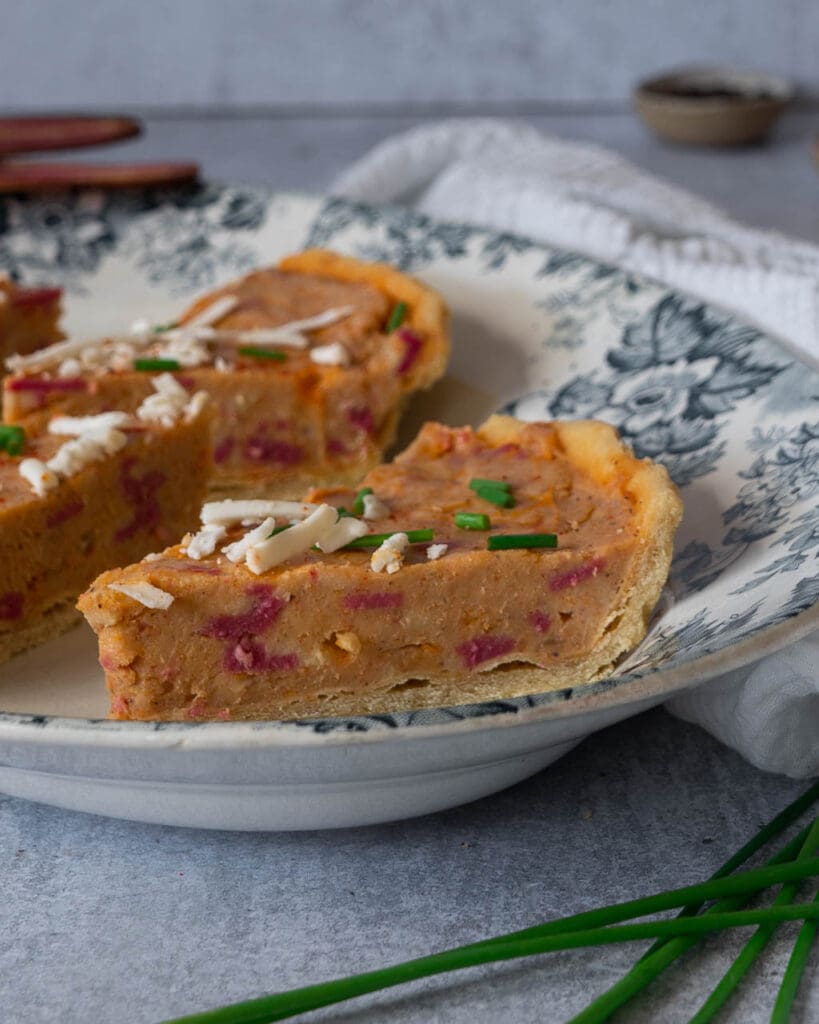
Swap out the onions for shallots in these vegan recipes:


Don’t forget to tag @aveganvisit on social media if you loved this article or if you make one of our recipes!
If you liked this article or if you have any additional topics you’d like us to cover, please leave a comment below – this provides helpful feedback to both me and other readers. If you want more delicious vegan recipes be sure to subscribe to the A Vegan Visit newsletter. We’d also love for you to join the AVV community on Youtube, Tiktok, Instagram, Pinterest and Facebook.
Tara
Hi, I’m Tara! I’m taking you on a trip around the world in vegan cuisine and bringing the world’s most delicious dishes to your kitchen.